
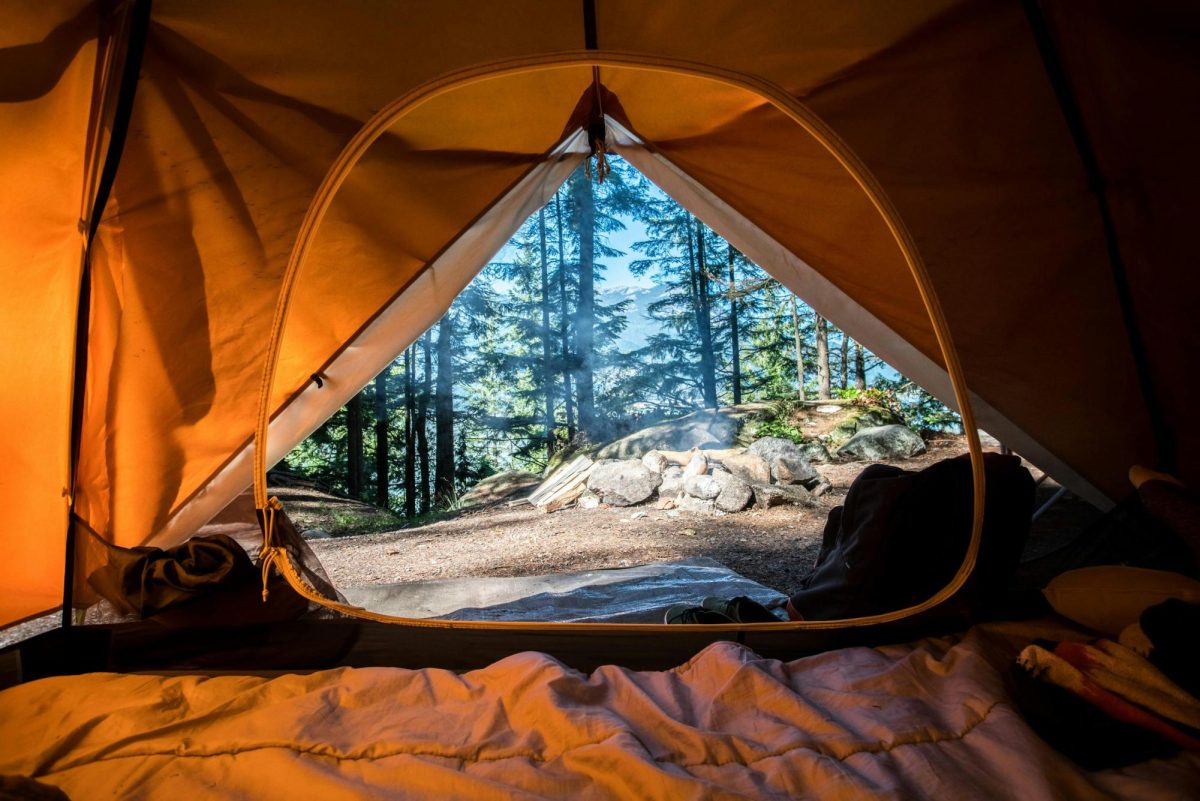
Camping may sound like a simple outdoor escape, but for beginners, it quickly becomes a chaotic mess of choices: glamping, tent camping, hammock camping, backpacking, cabins, and even sleeping on the ground (if you’re feeling bold). With so many options, it’s no wonder newcomers feel overwhelmed before they even leave the driveway.
Disclaimer: Much of this article is exaggerated or somewhat untrue. Any misfortunes suffered by readers who take this guide seriously are, unfortunately, entirely their own.
For those on a (large) budget, glamping allows a physical barrier between yourself and the great outdoors, along with an artificial atmosphere of air conditioning and a normal bathroom. Bathroom enthusiasts, beware! Every other method of camping has either public or nonexistent bathrooms, so if you desperately need a private place to store your excrement, venture no further!
Regular camping usually includes parking close to your campsite, unloading your things from your car, and setting up camp in a natural area. Remember to pack your essentials: a tent or hammock for sleeping, food, an open mind, and a friend. Friends bring the chance of dying alone down to nearly 0%!
A common cause for contemplation among concerned campers is the presence of certain wild animals. While sleeping outside, you happen to share that space with hungry creatures, like bears. More often than not, they would rather have the food in your stomach than your stomach itself (but the average person would rather be safe than sorry). Before camping, research the different animals in your area. It’s useful in some places to bring containers to hold your smellier food, as most animals track by scent. Depending on your area, in order to stop bears from eating said food, place it away from your camp and/or in a tree.
It’s important to recognize that there are more than bears hiding in the dappled shade of the forest canopy. These other animals are often equally as scary as those furry friends, but far more hidden. If you are camping near a lake or live anywhere in Florida, watch out for alligators. In warmer areas, snakes slither, so supervise stray steps! One of the greatest dangers of camping is the risk posed by other campers. Often, they are loud, stay up late into the night, bring young children, laugh, and say hello kindly when they see you. At night, watch the skies for marauding bands of bats, in case you or your smaller companions are snatched and carried away.
Cooking is an essential part of the camping experience. A common cooking method involves putting a stick through raw food and placing it in the fire. This strategy works with almost anything, but generally avoid juicier ingredients (cooking soup on a stick is usually pretty difficult). Remember to portion your product properly! Improperly proportioned campfire (or camp stove) delicacies invite fire-side arguments instead of fire-side harmony.
Speaking of campfires, the subtle art of tending them is imperative to get right. (Before any fire-tending may take place, ensure the area you selected for camping is not under a burn ban.) The wood you can burn is highly dependent on the trees in the area, unless you bring some with you. Though fires may end with large logs lopsidedly lying in a fire pit, they (almost) never start this way. Beginning with wimpier, spindly sticks, working your way up to finger- and then wrist-sized sticks, and ending with tree cross-sections are always the way to go. For fire-tenders of all training, it’s important to keep in mind that fires are like us; they need to breathe.
A common side effect of fires is constantly smelling like one. Smoke tends to get trapped in fabrics, food, and hair, but don’t fret! That smell will go away with a wash, a bite, and a shower, respectively. Fires can also be the most interesting thing happening at your campsite, so if you notice yourself staring into its depths for long enough that your friends go to bed, it’s probably time to join them (proper etiquette is usually to separate sleeping bags, but it depends on the group).
After mastering the basic out-and-back camping excursion, the more adventurous among our populace yearn for something more. Camping offers many add-on opportunities, including hiking, backpacking, and residing in more treacherous terrain than a simple forest. Backpacking, where the participants have to carry their entire camp on their backs, is an especially popular addition to the traditional camping experience. This does require a significant amount of athletic ability, however, so the more relaxed traveler may want to steer clear. Common backpacking adventures involve hiking along a looped trail, stopping and sleeping along the way, or hiking out to a point, sleeping, and turning back.
The other mainstream camping challenge is when campers set up in hard-to-reach places, including mountain tops, deserts, beaches, snowy areas, or active volcanoes (for the risk-takers). These areas all pose unique challenges and opportunities to have fun with your friends! Watch out for hypothermia, and remember to stay safe.
For the chronically online, keep in mind that many cellular networks do not service forests and wild areas. Also, remember that emergency services can sometimes have difficulties reaching people in the wilderness. This lack of artificiality is a bonus for many campers, but for those who are completely dependent on our indoor human comforts, they may wish to remain close to them. The people from Wall-E are calling for you.
Camping can be an amazing, frightful, and wondrous experience. Whether you enjoy it or not, you’ll likely think back on your experiences in the wilderness fondly in the time to come. The break from the mundane and the introduction of something natural can impact your life in a monumental way. Happy camping!
